Fresh game for Eckerts

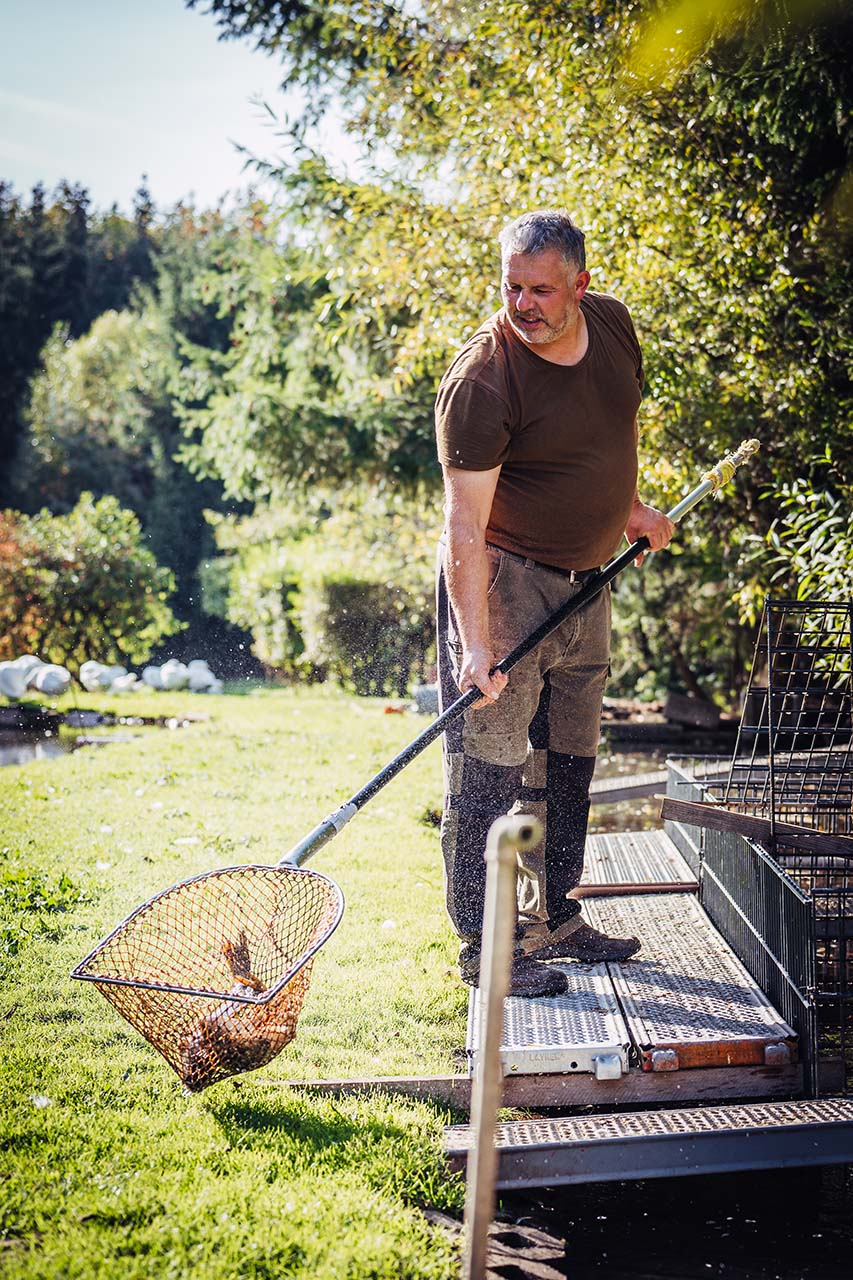
We source wild boar, roe deer, fallow deer and carp from the Hassbergen and from Lauter.
Hunting requires patience, but once you’ve found your prey, you have to act quickly
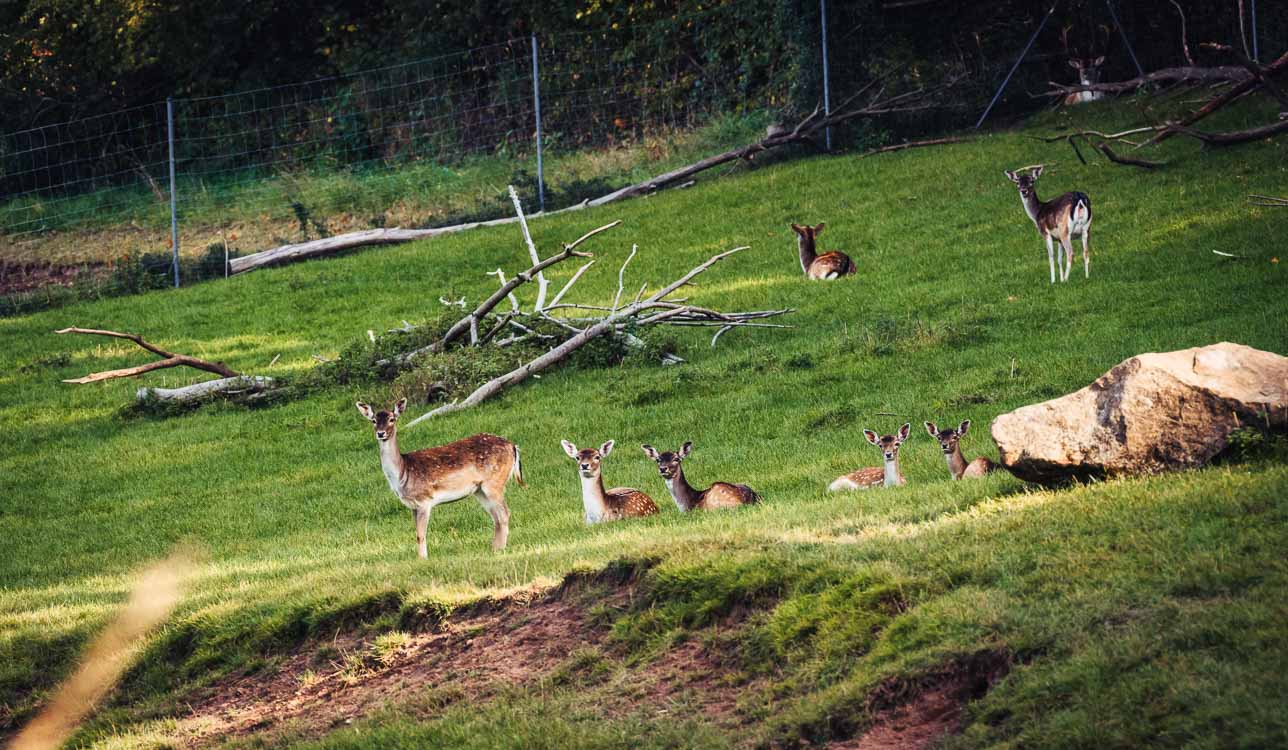
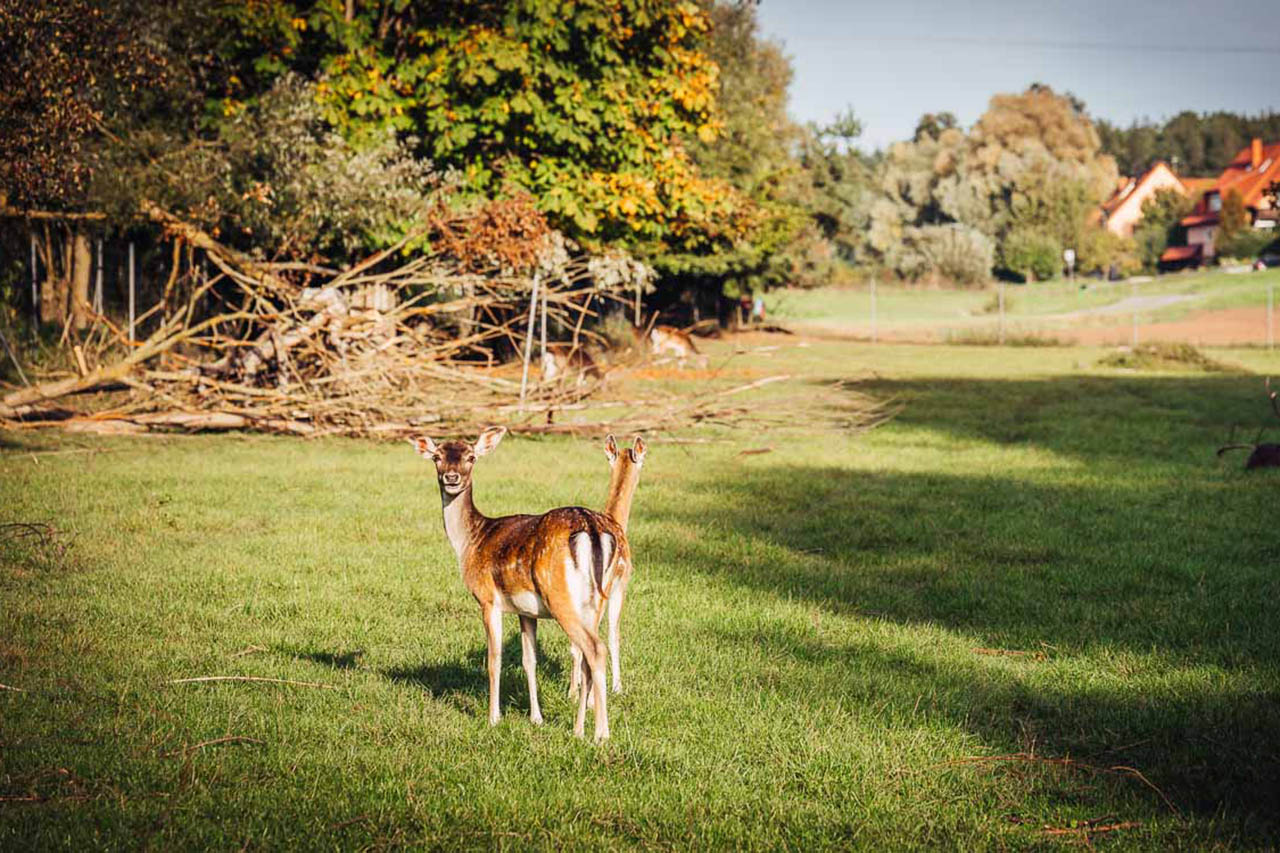
Matthias Hälterlein is a passionate hunter. He loves hunting so much that he would prefer to do it full-time, rather than just as a sideline. For many years now, he has been our supplier of wild boar and roe deer from his hunting grounds, as well as carp from his own ponds and fallow deer from his enclosure in Lauter.
Hälterlein’s hunting ground is situated in the Hassberge hills, just outside Bamberg. As wild boar cause considerable damage to agriculture, intensive population control is essential. However, these nocturnal animals like to hide in the woods and only venture out into the open fields under the cover of night.
Hälterlein’s hunting ground is situated in the Hassberge hills, just outside Bamberg. As wild boar cause considerable damage to agriculture, intensive population control is essential. However, these nocturnal animals like to hide in the woods and only venture out into the open fields under the cover of night.
Hälterlein monitors the animals’ feeding grounds in the forest, partly using smart, networked camera technology. When the animals appear, he receives a notification straight to his smartphone. However, he does not shoot the wild boars in the forest: he relies on deterrence to keep the herd away from the fields, where they wreak havoc whilst foraging for food. This is because wild boars live in close-knit family groups and learn quickly from their mistakes. He makes use of this when he catches the animals in the act and shoots one of the group in the open. In doing so, he makes it clear: you have no business being here – and the herd reacts accordingly.
Once the shot has been fired, things have to move quickly. The aim is to be back at his own abattoir with the game within half an hour at the latest, so he can begin the professional butchering process.
Once the shot has been fired, things have to move quickly. The aim is to be back at his own abattoir with the game within half an hour at the latest, so he can begin the professional butchering process.
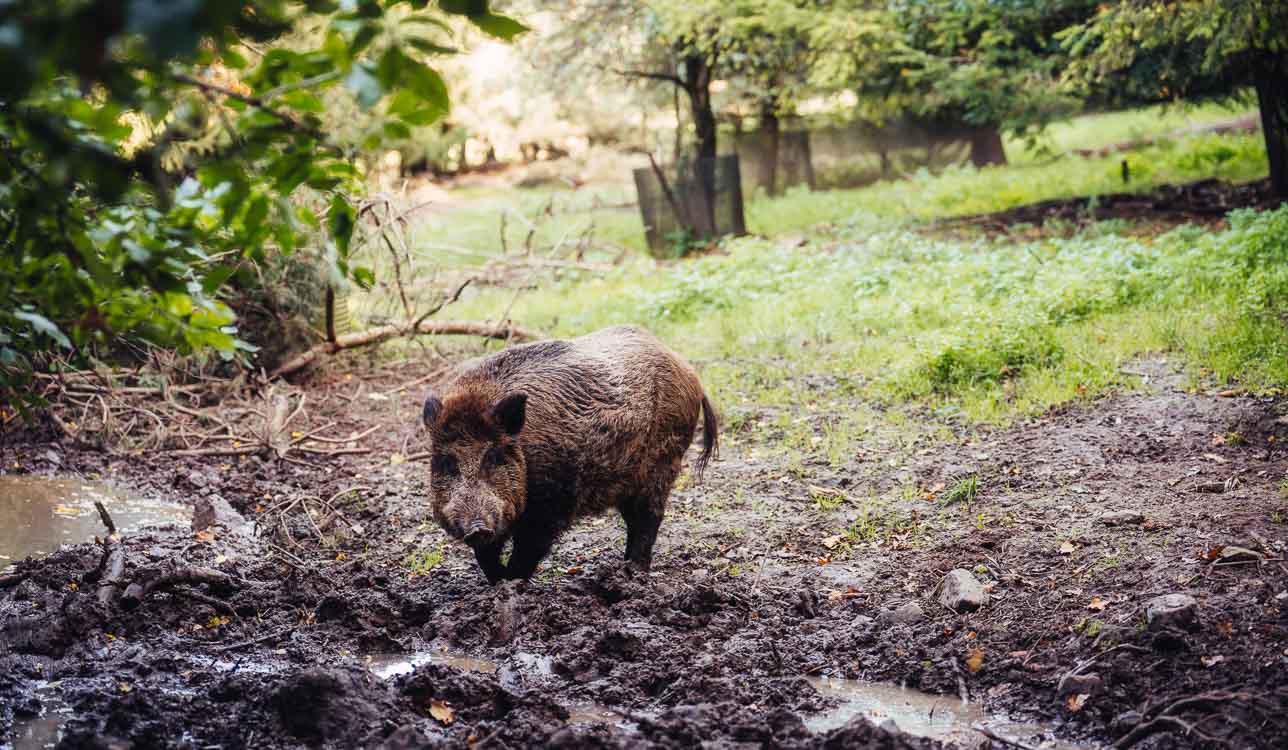
Around eight to twenty animals – ranging from sows, through piglets and yearlings, to stately boars – form a close-knit family group that goes its own way. They tend to give other herds a wide berth – unless a wolf is nearby. In that case, the different groups may even join forces for better defence. After all, nobody wants to come face to face with an angry boar, let alone several of them.
Unfortunately, dog owners repeatedly encounter these imposing creatures when out in the woods at dusk, often with dogs running free. Although Hälterlein is not aware of any wild boar attacks, he warns against taking dogs for a walk too carelessly in wild boar territory.
Unfortunately, dog owners repeatedly encounter these imposing creatures when out in the woods at dusk, often with dogs running free. Although Hälterlein is not aware of any wild boar attacks, he warns against taking dogs for a walk too carelessly in wild boar territory.
The meat is of excellent quality – and is also appreciated by vegans
Radioactivity in wild animals remains a major concern. Hunter friends report to Hälterlein in Bad Kötzing, Cham or Landsberg am Lech that becquerel levels – the unit used to measure radiation exposure – are well over 600. Anything above this threshold is unfit for human consumption and is destroyed.
The forests in the Hassberge mountains were, however, spared when the nuclear disaster in Ukraine occurred 40 years ago. The radioactive cloud caused the highest levels of contamination in other regions; the area around Bamberg was not fully affected. Levels of around 30 becquerels are typical here.
The forests in the Hassberge mountains were, however, spared when the nuclear disaster in Ukraine occurred 40 years ago. The radioactive cloud caused the highest levels of contamination in other regions; the area around Bamberg was not fully affected. Levels of around 30 becquerels are typical here.
The lean meat from local wild boar can therefore not only be eaten without hesitation, but also appeals to those who have chosen a vegan diet. They not only recognise the need for population control, but also appreciate his professional approach, and so make a conscious and enjoyable exception.
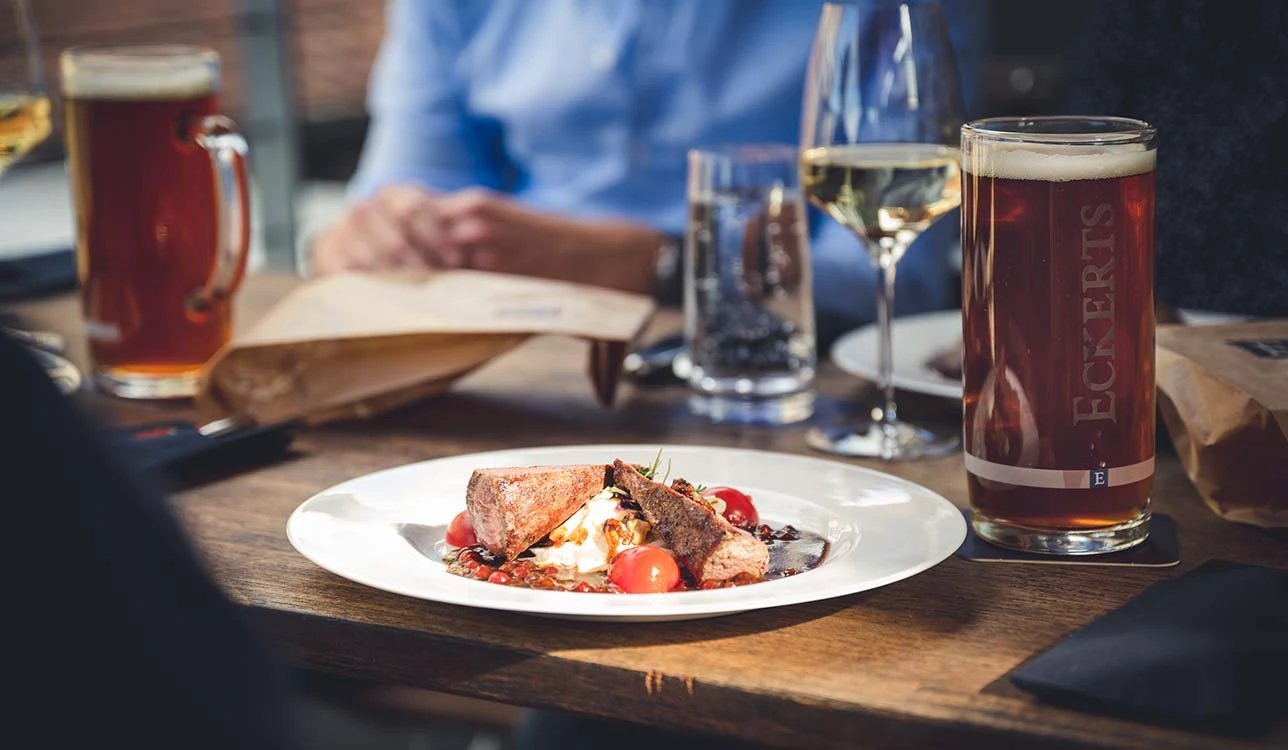
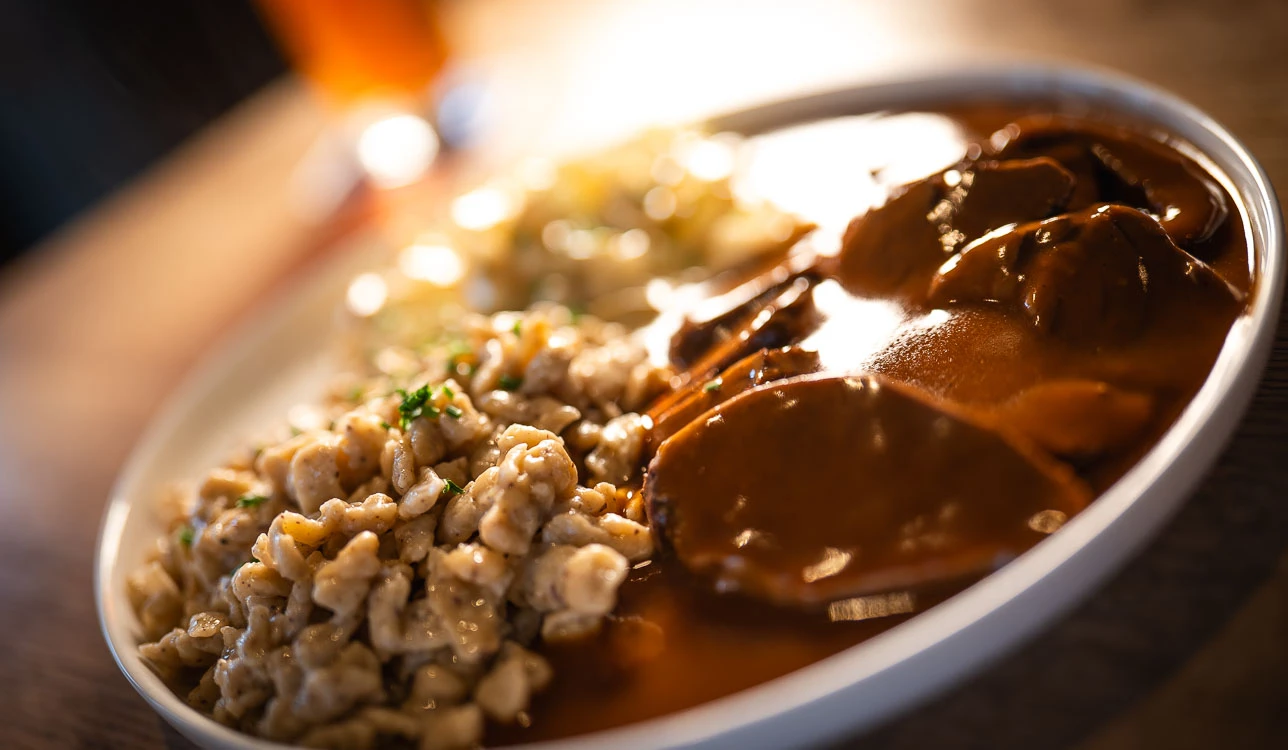
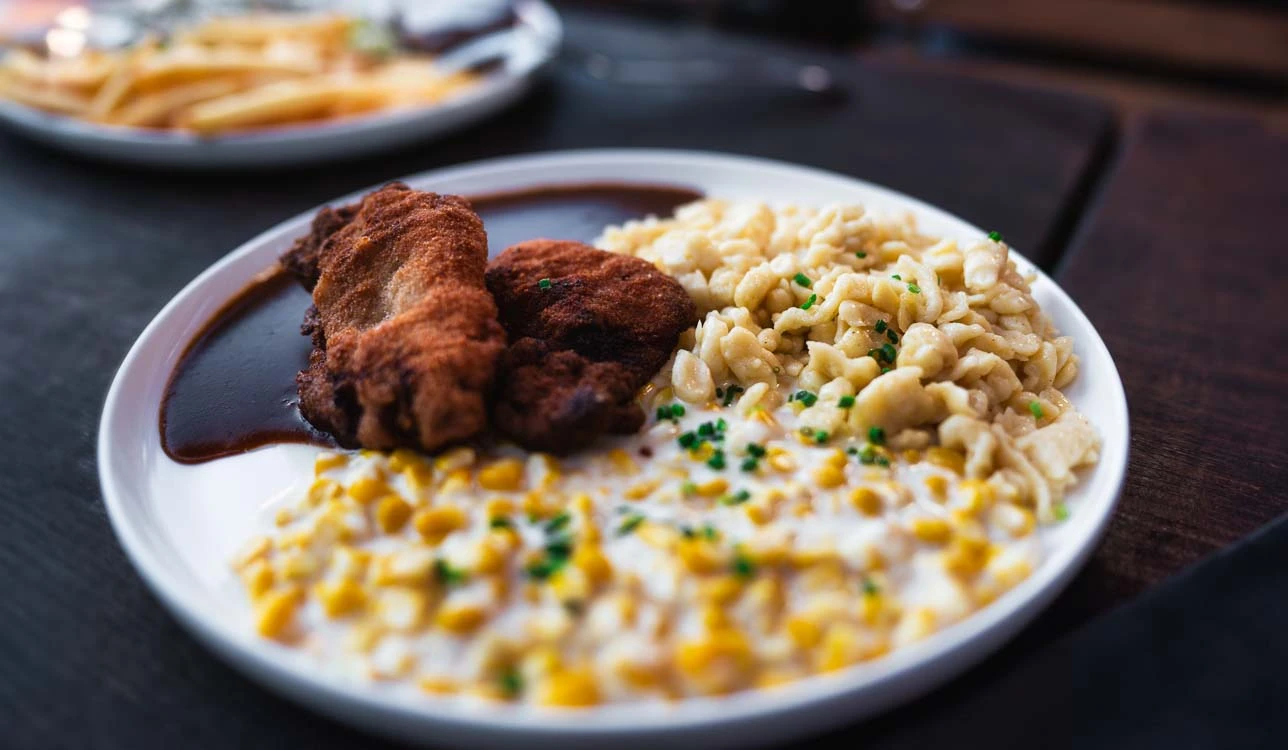
Here at ECKERTS Wirtshaus, we are delighted to have Matthias Hälterlein as our dedicated and reliable hunter, who supplies us with high-quality game and fish. On our menu, you will find – depending on the season and availability – traditional dishes such as breaded wild boar escalope, tender, pink-roasted saddle of venison, venison goulash or carp fillet.
Here at ECKERTS Wirtshaus, we are delighted to have Matthias Hälterlein as our dedicated and reliable hunter, who supplies us with high-quality game and fish. On our menu, you will find – depending on the season and availability – traditional dishes such as breaded wild boar escalope, tender, pink-roasted saddle of venison, venison goulash or carp fillet.